Showing posts with label update. Show all posts

Tuesday, December 11, 2012

Galaxy Note II is going to have Android 4.1.2 update


This is a joyful news for owners of Galaxy Note II. The device is going to get powered by Android 4.1.2 update for the international handset, Galaxy Note GT-N7100. The update will be fresh and new however most of the people think that it's not a big update. But after all, its official update. It is supposed that this update will bring new notification panel, speed issues, disabling the multi-view, a new lock screen, updated Google Now and bug removal. It will soon make its way on Kies and Over The Air on devices. 

Are you going to update your Galaxy Note II? Share your views in comments.

Saturday, November 24, 2012

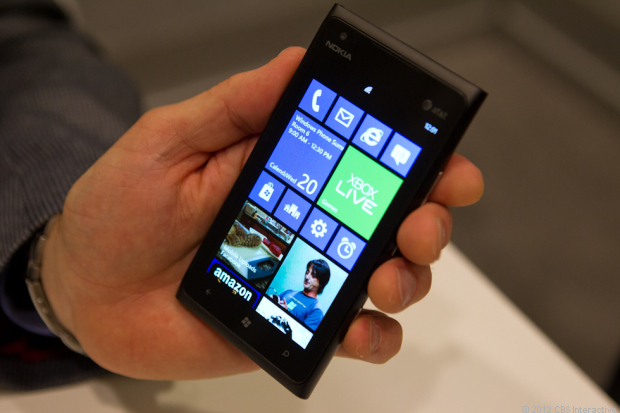
Windows Phone 7.8 will hit China in few weeks


China is going to receive Windows Phone 7.8 update. According to Microsoft’s Vice President of Greater China, the company is planning to roll out Windows Phone 7.8 to the region in the coming weeks. They have also promised to release this update before the end of this year. It can be a gift for the Windows Phone users of this holiday season. 

Microsoft's executive told Beijing Newspaper BJD that Windows Phone 8 handsets would hit the market there some time in December with companies like Samsung, Nokia, HTC etc. 

Windows Phone 7.8 is not like Windows Phone 8. WP 8 has a new kernel i.e. it is based on Windows NT. But still it is good and bug free than Windows Phone 7.5.

Tuesday, November 13, 2012

Jelly Bean updates are available for Nexus devices to download


A good new for Nexus owners. You are getting the new Jelly Bean flavor. 

The Galaxy Nexus and Google Nexus 7 tablet are scheduled to receive the Android 4.2, JellyBean update by mid-November.This software upgrade will also come pre-installed on many devices included in Google's new Nexus line-up such as the Nexus 4, 7 and 10.

The update brings some new features to Android products including improvements to the gesture keyboard, sphere camera and new notifications style.

If you're a Galaxy Nexus owner and are ready to buy Google's latest flagship phone Nexus 4, no need to worry because you still have the option to upgrade your Galaxy Nexus to Jelly Bean. You can download the necessary file and flash the ROM. However, this update will not bring the new hardware updates present in Nexus 4.


At least 512 MB RAM otherwise no Jelly Bean for your HTC


HTC is going to serve its users with latest Android dessert, Jelly Bean.

HTC has updated their Android FAQ page. Here the manufacturer has mentioned that which devices are going to receive the most awaited taste of Android, i.e.Jelly Bean. They have clearly specified that the devices having less than 512 MB of RAM will not receive the update and they have to stick to their present OS. So it also shows that such devices will not receive any update. For Example, HTC One V and HTC Desire C users have to stick to the ICS version.


However, HTC said it will update its customers on the other devices that won’t receive Jelly Bean in the future.


Here's the updated info from HTC.


What devices will not get Android 4.1?


We work hard to ensure each of our products has the optimal user experience and therefore some products will remain at their current version of Android. In general, devices with 512MB RAM or less will not be upgraded to Android 4.1. At present, these devices include the HTC One V and the HTC Desire C. As we identify other devices that will not be upgraded, we'll provide updated information.
It should be noted that upgrades are not the same thing as ongoing support. Devices not being upgraded to Android 4.1 will still get software improvements, security fixes, and technical support.

Monday, June 11, 2012

Mac OS X Mountain Lion 15 new features

Apple announced on Monday during its 23rd annual Worldwide Developers Conference that OS X Mountain Lion, the latest upgrade to its core Mac software, will be getting a series of enhancements.
Apple exec Craig Federrichi demoed various Mountain Lion features for attendees, highlighting Siri-like dictation, a Power Nap feature which updates your streams while the Mac sleeps and a tabview feature associated with the Safari browser, which allows you to zoom in and out. It will also get deeper integration with iCloud.
Mountain Lion will ship in July and cost $19.99. It will also serve as an upgrade to Snow Leopard.

Apple OS X Mountain Lion: 15 New Features

1. Deeper Integration With iCloud

Today, Apple's iCloud technology syncs media (music, photos) and some data among iPhones, iPads, iPod Touches and to a limited extent Macs. With OS X Mountain Lion, iCloud plays a greater role on the Mac side, syncing calendars, contacts and email across all your devices. iCloud syncing comes to a host more apps, including Messages, Notes and Reminders (more on those in a bit). As iCloud and the Mac evolve, Apple's vision of a unified experience across all devices is becoming clearer.


2. Messages Replaces iChat
With iOS 5, Apple introduced iMessage for its mobile devices, which emulated BlackBerry Messenger's ability to send messages either as text messages or pure data. Now iMessage gets a desktop friend: Messages, which replaces iChat and acts as an instant-messaging app (for accounts on AIM, Google Chat and others) that's iMessage-friendly. You can easily send photos and videos via messages, and you can launch FaceTime from the app, too. It's as yet unclear how it'll handle text messages sent to specific phone numbers, but it's another step toward a unified chat experience.


3. Notification Center
Notifications got a huge upgrade with iOS 5, so it only makes sense that similar technology makes an appearance on Mountain Lion. Notifications will have a unified look, popping up in the top right of the screen (no option to customize the location) and going away quickly. Sliding two fingers to the side on your trackpad will open up your notifications list on the right side of the screen, which looks almost exactly the same as its cousin on iOS.


4. Share Fast, Share Often
Apple has added a Share button to its apps, which it calls Share Sheets. Now when you're in Safari, you can quickly send a link. Same with photos from iPhoto (and Photo Booth!). There's also an option to add location. Tellingly, Twitter is an ubiquitous option while Facebook sharing has only been added to QuickTime.


5. Twitter, Twitter Everywhere
Twitter integration is now at the OS level with Mountain Lion, and logging in once from you System Preferences enables sharing across all apps. Share options for Twitter are built into almost all Apple apps, and any @replies and mentions you get will pop up as notifications.


6. Game Center
The iOS Game Center comes to the Mac, bringing with it leaderboards, game discovery from friends and even multiplayer gameplay. That's right, with Mountain Lion you'll be able to play games on your Mac with your friends in iOS devices, in real time. That is, as long as there's a Mac version -- good thing Apple is releasing the Game Kit tool to make it easier for developers to creat Mac games that play nice with Game Center.


7. AirPlay Mirroring
Apple AirPlay lets you wirelessly stream music and videos to any AirPlay-compatible device, which includes Apple TV. That means iPads and iPhones can stream video to a TV screen via Apple TV, and now Macs get added to that list with Mountain Lion. On the Mac, AirPlay mirroring can send whatever's on your screen to a TV set connected to an Apple TV (at 720p resolution), giving those videos and presentations room to stretch out.


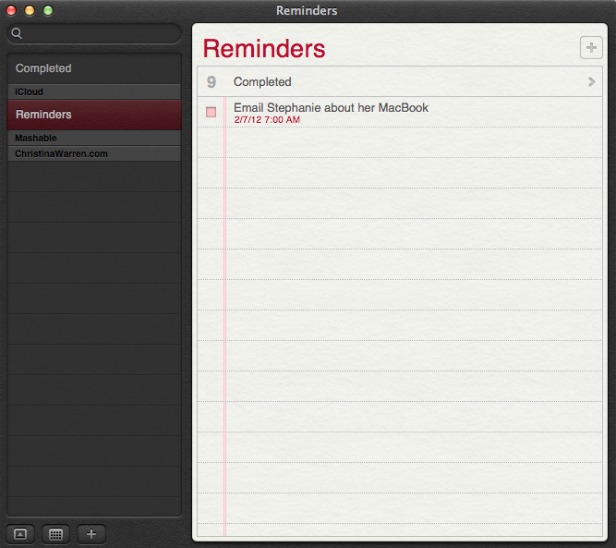
8. Reminders
The Reminders app that appeared with iOS 5 now has a Mac version, and it syncs across all your iOS devices via iCloud. The app lets you make a lists within tasks, and you can set alerts, too -- just like on iOS. One thing missing in the Mac version, though: the ability to set an a location-based alert, reminding you to do something when you arrive at or leave a place. You'll still need an iPhone or iPad to create those.


9. Notes
Like Reminders, Notes now gets an Mac version, with some special abilities. The app is compatible with rich text, letting you add photos, movies and bulleted lists to your notes. Plus you can treat them like Post-It notes, sticking individual notes to your screen so they always appear "on top" of your apps. Like reminders, Notes get the iCloud-syncing treatment across all your iOS devices.


10. Contacts
In Mountain Lion, Contacts replaces the Mac Address Book app, another sign of bringing the OS X experience with iOS.


11. Safari Tweaks
Apple's web browser gets a makeover with Mountain Lion, with many of the changes clearly influenced by the rapidly rising Google Chrome. The biggest change: the address bar and search field get combined into an "omnibox." Also, the Reader button becomes much more prominent, and Safari is finally ditching the "http://" -- just the URL is visible in casual browsing. Finally, you can now sync Safari tabs across devices via iCloud.


12. Gatekeeper
Apple has introduced a new way to protect your Mac from malware, called Gatekeeper. With Gatekeeper, you choose in your System Prefs the level of protection you want: whether to install and run apps from the Mac App Store only, from the store and trusted developers (vetted by Apple) or from anyone. Control-clicking will let you override your settings temporarily.


13. Apple ♥ China
Apple's business is booming in China (iPad trademark legal battles notwithstanding), and it clearly wants to make its products as Sino-friendly as possible. Mail, Contacts and Calendar all work with some of the top Chinese online services, including Baidu. Share Sheets for Chinese users will include China-based video-sharing websites and blogging services, and there are some improvements to basic text input as well.


14. Software Update Changes
Now clicking on Software Update will bring you right to the Mac App Store, and if there's new software available, you'll get a message in your Notification Center. Apple wants its App Store to be the primary way Mac users get software, and this is a sign that the company is eating its own dog food in that sense.


15. Just Call It "OS X"
It's a semantic change, but it worth noting that Apple has ditched the "Mac" part of "Mac OS X" when it refers to the new OS. Could that be a sign of an even deeper marrying of its desktop software with iOS down the road? Stay tuned.

[Source:Mashable]

Apple WWDC 2012 live update

Finally on 11 June 2012 Apple kicked off it's World Wide Developers' Conference (WWDC) event. New updates regarding to all Apple products will be unveiled. Event will be held till 15 Jun @ Moscone Center, San Francisco. First day was of software and unveiled new features of iOS6, Mac OS X 8.0 Mountain Lion, Macbooks and Apple Maps etc.


And following is a slideshow displaying major photos of First day of the event.


Tuesday, May 15, 2012

New and secure Mac OS X Lion 10.7.4


Apple has released a new version of OS X Lion: 10.7.4, bringing an updated Safari as well as the usual bug squashes and stability improvements.
The 730MB update also fixed the FileVault bug, which in certain cases left your login credentials out in the open.
The new Safari 5.1.6 doesn’t bring any important new features, except for stability improvements.
Other improvements include better Internet sharing of PPPoE connections, RAW image compatibility for additional digital cameras, and a fix for the issue in which the “Reopen windows when logging back in” setting is always enabled.
To download the update, choose Software Update from the Apple menu.
You can find the full list of fixes and improvements here.

[Courtesy: Mashable]

Apple releases FLashback fix for OS X Leopard


After issuing similar fixes for Lion and Snow Leopard in April, Apple has now released an Flashback removal security update for OS X Leopard.
Apple describes the update as follows: “This update removes the most common variants of the Flashback malware. If the Flashback malware is found, a dialog will notify you that malware was removed. In some cases, the update may need to restart your computer in order to completely remove the Flashback malware.”
Flashback is a malicious program which uses a Java vulnerability to track Mac users. At one point, more than 600,000 Macs were estimated to be infected.
The 1.23MB Flashback removal update can be found here.
Apple also released a 1.11MB Leopard update which disables versions of Adobe Flash Player which don’t have the latest security updates. You can find this update here.


[Courtesy: Mashable]